
A land of opportunity
By James Ellis | 18.12.25
James Ellis, a Director in our Planning team, unpicks what a(nother) new National Planning Policy Framework means for rural development.


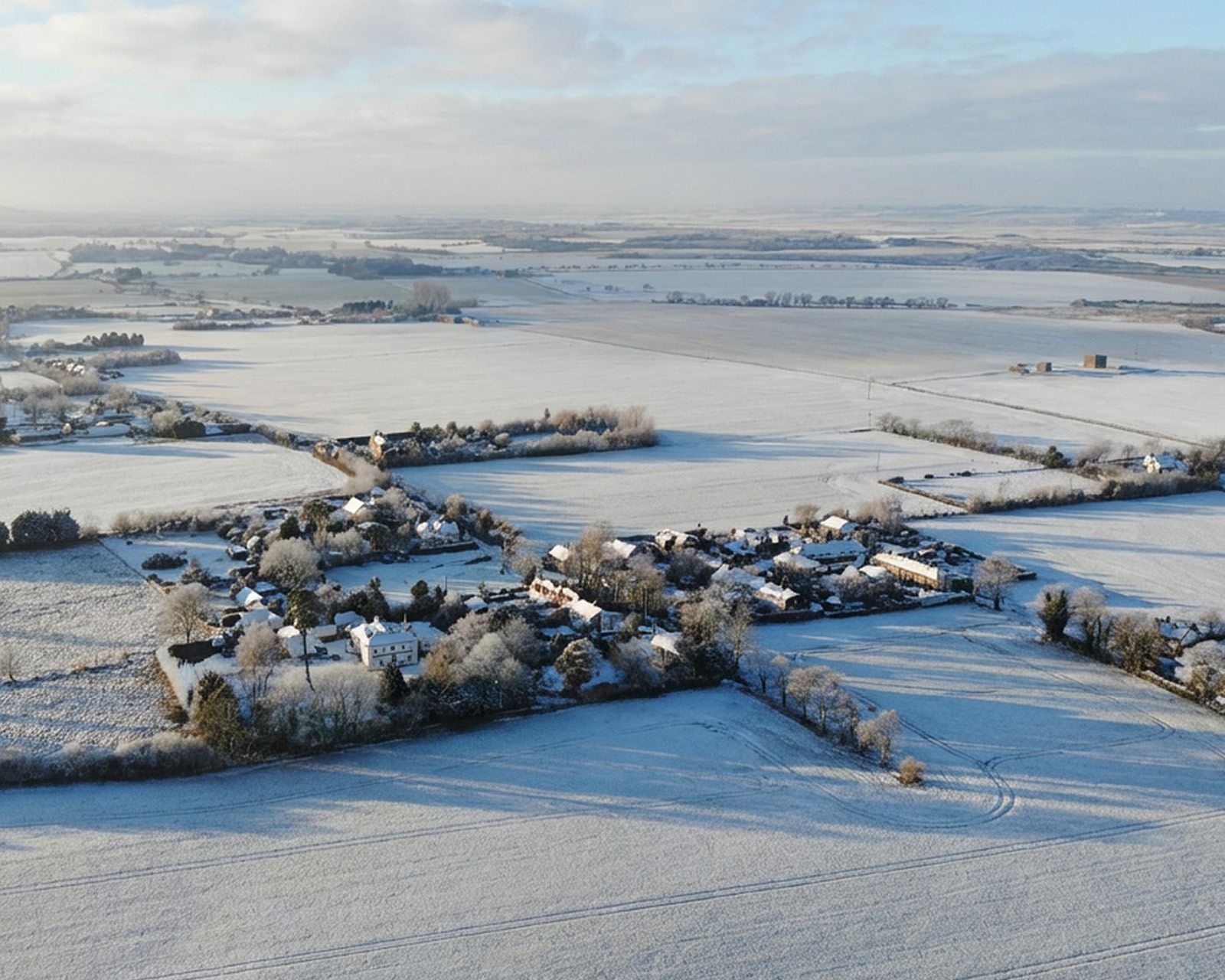
For the third year running, Whitehall has delivered us something to unwrap pre-Christmas in the form of a new National Planning Policy Framework. And it is not just the ‘planoraks’ getting excited this time, this really is a welcome gift for those looking to bring forward high quality development in the countryside.
On 16th December, Ministry of Housing, Communities and Local Government released the details on proposed wholesale changes to the national planning system. The government’s consultation paper boldly states that: "taken together, these reforms represent a truly seismic regearing of the system..." and in this instance, it seems that rhetoric rings true.
The changes proposed present huge opportunities and have the potential to contribute to unlocking the significant latent potential of rural areas. For landowners, and those with an interest in seeing rural areas succeed, the proposals go some way to addressing the flaws in the planning system which make it too slow, opaque, and uncertain.
The planning system has too often hindered rather than enabled progress and prevented ideas getting off the starting blocks, meaning the homes, jobs and opportunities that could have been achieved, have not materialised.
Nowhere is this more pronounced than in rural areas, with a resolutely urban centric planning system constraining much needed development to enhance the vitality of rural communities and economies.

What is proposed?
The consultation promotes new national policy which is accessible and understandable to everyone and proposes a system that increases certainty by applying a more ‘rules-based’ order.
The full suite of changes includes:
A new National Planning Policy Framework – the central guide for how land is planned and developed in England, which sets out the rules and priorities that local councils and developers must follow when deciding what gets built, where, and how.
A series of new National Decision-Making Policies, an initiative to replace hundreds of different policies set by local planning authorities across the country with varying interpretations of national guidance with clearer, standard national policies.
Changes to the Biodiversity Net Gain system to exempt smaller sites from these requirements.
Expansion of the use of simplified planning applications to allow greater use of Permission in Principle (PiP), which seeks to establish the suitability of sites for development before requiring full technical details.
What does this mean for rural development?
This overhaul is welcome on many levels, but there are some specific opportunities for rural development worth noting:
All villages in England now a sustainable location for housing development
For many decades smaller villages across England with less services have been considered unsustainable locations for new housing development, citing a lack of services as the main constraint. What this creates however is a self-perpetuating decline in service provision, with villages unable to sustain schools, shops, and pubs due to aging populations without new homes to support community renewal.
A new national policy proposes to change that and states that housing development within all villages – as well as towns and cities, should be approved unless the benefits of doing so would be substantially outweighed by adverse effects. The scale and design of proposals in relation to a place will still be important but the policy reflects a fundamental change in how villages across England could grow over decades to come.
All brownfield sites considered to present opportunities for housing and other development
The redevelopment of brownfield sites outside of settlements for housing and other development receives unequivocal policy support in new policy.
This is major change which could benefit many rural landowners who often have former agricultural sites that are now classed as brownfield.
Housing opportunities for rural estate owners
One specific policy that could benefit rural estate owners is support for ‘infill’ development including new housing which ‘fills in’ undeveloped space between existing houses located in the countryside, outside of villages.
This could create opportunities for new development in rural areas which would previously have been considered isolated and unsustainable. For estate owners who own land on the edge of villages, general policy support for new housing which will support and enhance the vitality of rural communities and enable villages to grow and thrive is now replaced with a direction to local authorities to allocate sites in their local plans for these purposes.
Support for farmers and rural businesses
New policies include overall support for rural business development, with a specific focus on supporting farm viability and sustainability, through helping to deliver new farm infrastructure and worker accommodation through the planning system.
New futures for heritage assets
Changes include supporting the reuse of heritage assets to realise more heritage related development, proposed to simplify complex heritage planning policy and create a more positive framework to enable these important buildings to be repurposed.
Green Belt changes
New policies support a more pragmatic planning approach to developing in Green Belt and introduce clear rules around the recently introduced Grey Belt classification that supports the reuse and development of areas of Green Belt considered of lesser importance. Land in Green Belt close to stations receives strong support for new development (see below).
Major support for new development close to train stations
New policies throughout the government’s consultation document include strong support for new housing and other development in relative proximity to well-connected stations, with frequent services, in areas with the strongest economies by Gross Value Add. This could completely change prospects for rural landowners with land in proximity (an 800m distance has been referenced by Ministers) to such stations.
A more pragmatic approach to flood risk
Policy changes take a much more pragmatic approach to flood risk, reflecting ongoing change over recent months and years. Some flood risk on a site should no longer be seen as a barrier to development, with clear opportunities created for landowners where flood risk can be safely managed in new development proposals.
A revised approach to nature protection in the planning system
Changes include a more strategic approach to how the natural environment policy interacts with the planning system. New policy references how plans should have regard to Local Nature Recovery Strategies - strategic area wide plans, providing greater clarity for those promoting land use changes and development on the environmental factors they need to consider.
The term ‘valued landscapes’ has been removed from policy – a subjective reference often seen to prevent development going ahead. Biodiversity net gain rules are set to be changed to exempt smaller developments from these requirements which many promoting development have found challenging.
Support for small and medium developments
New policies provide clear support for small and medium housing developments which make up the bulk of many sites in rural areas. A new definition of medium development of up 10-49 homes is included. At least 10 percent of all land allocated for housing in a new local plan should be on sites of one hectare or less which, coupled with the changes to spatial development policy outlined above, creates substantial opportunities for small rural sites.
Faster local plan creation to allocate land for development
We have helped many landowning clients submit land to local authorities to be considered for allocation for the future development in their Local Plans. Submitting land via a ‘Call for Sites’ process is lengthy, as local authorities take decisions and advance plans slowly over many years. New government requirements stipulate that plans must be produced faster and in a maximum 30-month period. This will provide greater certainty for landowners on whether their land has been selected for development or not.
Seize the opportunity - responding to these changes
These significant proposed changes to the planning system are part of a consultation lasting until March 2026. However, national government consultations on planning changes rarely see a change in scope, tending to see any changes focused on specific policy wording rather than wholesale change.
The changes proposed reflect wider government objectives of delivering growth and meeting housing need, through reforming the planning system.
We strongly recommend reviewing the proposed changes, identifying opportunities this creates for development on rural land and brownfield sites and making sure you are well positioned to benefit. Alongside national changes, many local authorities are producing new Local Plans, which will need to take account of the changes. It is important that landowners, engage with local processes whilst reviewing national opportunities.
Too good to be true?
Whilst the changes build upon some previous planning reforms and incremental changes, in our view these proposals have the potential to deliver fundamental changes, which will restructure how planning operates in England and create opportunities for rural areas and landowners in ways which previous reforms will not have done.
The December 2025 changes are seen as the culmination of the Government’s stated intention to reform the planning system. Additional significant changes are not anticipated. The proposed changes form the basis of the national planning approach we see enduring for at least the remainder of the decade. After the recent Budget, closely followed by the planning changes, landowners can now plan with an understanding of the wider framework which will provide increased certainty over planning outcomes.
Get in touch
Give us a call on 01756 797501 or email info@ruralsolutions.co.uk. We’d be delighted to have a chat.
You might also be interested in...



We are using cookies to give you the best experience on our website. You can find out more about which cookies we are using on our cookie policy.